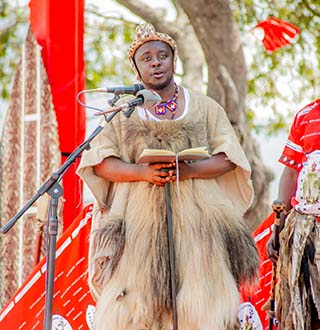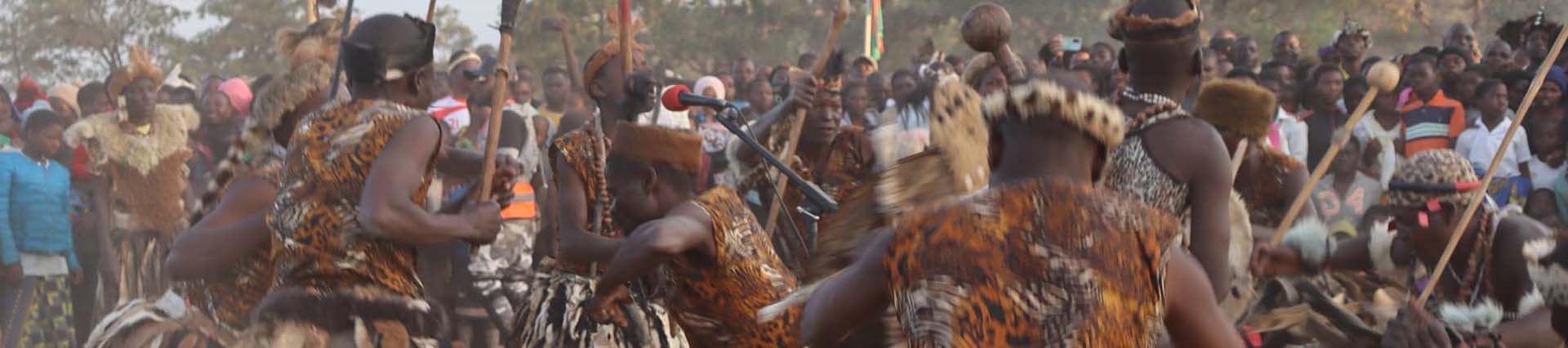
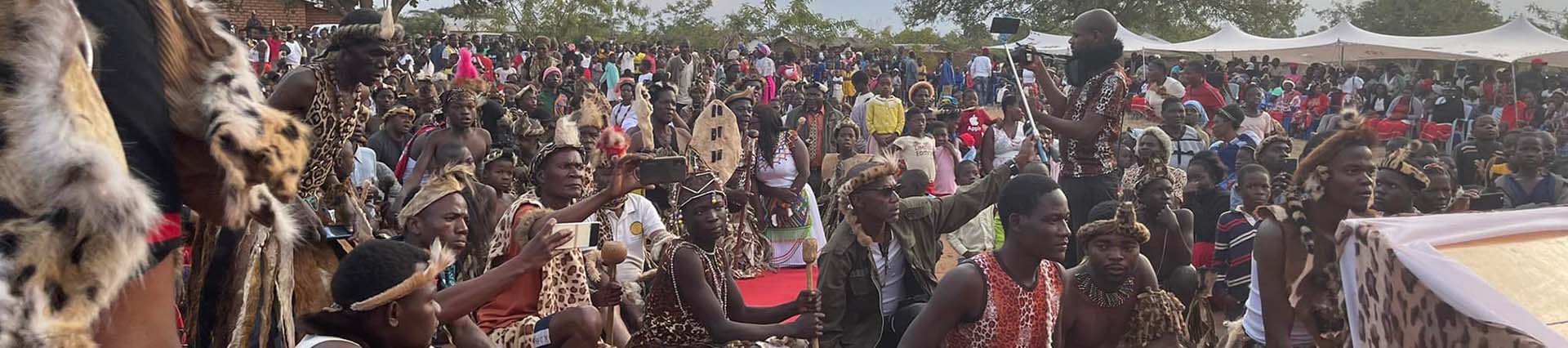

The vast Usutu valley, the present-day Kingdom of eSwatini, parts of the Republic of South-Africa including the Zulu Kingdom and parts of southern Mozambique can be regarded as the ancestral home of the Nguni otherwise popularly known as abaNgoni or Angoni north of South-Africa and eSwatini.
They lived in large clans each under a leader with several of the clans under one leader called the iNkosi or plural amaKhosi. The amaKhosi in turn owed allegiance to one paramount or supreme leader, the King, iNkosi Ya Makhosi or Ngwenyama.
The Gomani Royal Family of the Maseko Ngoni or Maseko Nguni in Malawi, Mozambique, Tanzania, Republic of South-Africa and eSwatini trace their roots to royal hierarchy of the amaNgcamane Maseko kings who ruled parts of South Africa and Swaziland particularly during the reign of King Maphanga Maseko after the assassination of King Mgazi Maseko.
During the famed migration northwards, also known also as the Mfecane, when due to a host of reasons, the Nguni who left their ancestral home came into contact with different ethnic groups and due to linguistic influence, nguni names and words underwent change. Hence the Nguni outside present day South-africa and Swaziland came to be known as the Ngoni. The Maseko Ngoni royal name of Ngcamane overtime gave way to such variations as Ngomane, Ngomani and and r lGomani
King Maphanga Maseko who had succeeded Ngcamane Maseko 1, was to be succeeded by his son Ngcamane Maseko II more popularly known as Ngwana Maseko..
Some researchers of Nguni history assert that Ngwana Maseko, with a number of Maseko amaKhosi notably Nobulako Maseko, and accompanied by some regiments and followers left the Kingdom .to establish his own after a quarrel with his father , the King.
Ngwana led his followers to present day Zimbabwe where he died. He was succeeded by his son Mputa who left the initial settlement and crossed the Zambezi river leading the Maseko Ngoni to a new settlement near Domwe mountain in the present day Angonia district of the Republic of Mozambique, not far from Dedza town in Malawi.
In a quest to expand their territory, Mputa and the Maseko Ngoni trekked towards northen Tanzania and settled in Songea district. The Maseko Ngoni.were first to establish Ngoni presence in northern part of present day Tanzania. After a battle with one of the ethnic groups, Mputa was assassinated in.1856 when he was in one of his own military or regimental villages. His son Chikuse was still a young child and Chidyaonga , Mputa’s brother, was appointed Regent. He was to be assisted in the Regency by Indlovukazi Namulangeni, Mputa's widow, and mother of the young Crown Prince.
The Maseko Ngoni later left Songea in Tanzania and retraced their footsteps back to Domwe in Mozambique. In 1870 when Chikuse was now considered as an adult, His Uncle, Chidyaonga, decided to summon all Maseko Ngoni Amakhosi and elders to witness the handing over of royal power. The youthful Chikuse was accorded the exclusive royal Bayethe salute which is only accorded to a King or Ngwenyama. Chidyaonga, the great warrior and faithful Regent, who was an iNkosii in his own right, died in 1878 and was succeeded by his son Chifisi not only as a Maseko Ngoni chief but also as Commander of the reputed Njokozela war division. The Maseko Princes were also military commanders of impis who were organized in different divisions. The Impis from different different divisions were, particularly when preparing for war, centrally drilled , at the King's headquarters, and merged into an all Kingdom army under a commander reporting directly to the Inkhosi ya Makhosi. The Ngwenyama would often personally take charge of the Maseko Ngoni army.
No sooner had Chikuse ascended to the throne than he embarked on a kingdom expansion drive, ably assisted by his cousin Chifisi and other Maseko Ngoni Princes and military commanders.
1891 was a fateful year for the Maseko Ngoni at Domwe. Ngwenyama Chikuse died in the month of March of that year. On 14th May, in implementation of the resolutions of the Berlin Conference of 1884, where European powers had agreed to partition Africa according to their spheres of influence, the Foreign Office of the British Government issued a notice in the London Gazette declaring most of present day Malawi, including areas which were part of the Kingdom of the Maseko Ngoni, a British Protectorate under Queen Victoria. The same was true of the part of the Kingdom which fell under the Portuguese who had issued a similar declaration. Later in August of the same year Chifisi died and was succeded by his son Kachindamoto. These events were to significantly affect the future course of Maseko Ngoni history and would present challenges to the successor of Chikuse.
At the time of his death, Chikuse had several sons from more than one wife namely, not in order of birth, Gomani, Zintambila, Mandala, Bvumbwe, Kantsizi, Kanduku, and Kabango. In compliance with Maseko Ngoni laws, only Gomani and his younger brother Zintambila were eligible for the throne. Gomani Chikuse became Inkosi ya Makhosi . But unbeknown to the Ngoni King, Sir Harry Johnston had moved in to take his position as the first Governor of the British Protectorate of Nyasaland. The Maseko Ngoni Kingdom was now truly divided by an artificial boundary agreed by European powers in distant Germany at a conference, the Berlin Conference of 1884、
A few years after his accession, there was a serious misunderstanding between Goman Chikuse, also known as iNkosii ya Makhosi Gomani 1, and his half brothers and cousins. Civil war followed and some of the Princes and their follwers left Domwe to found their own Chiefdoms. But peace would still elude Gomani Chikuse and his Kingdom.
In 1896 Sir Harry Johnston decided to assert British authority by collecting the infamous hut tax in the declared Protectorate. Gomani 1 issued a decree prohibiting his subjects from paying the oppressive tax. He mobilized and led his impis to ensure compliance. His action was described in a sensational article published on 15th October in the British Central- Africa gazette in 1896. It read, “ Chikusi himself had come down the mountains with several Impis and over run the low country between Liwonde and the Kirk range…”. The Protectorate Government’s response was to despatch an army from Zomba under Captain Stewart equipped with modern and more superior weapons which the spear and the shield of Gomani Chikuses’s Impis could perhaps not match. His army defeated, the iNkosi ya Makhosi was arrested, subjected to a mock trial at Dombole mission, found guilty and sentenced to death. He was shot by by a firing squad.
In 1926 after the setting up of a special committee, contributions were solicited and received from Ngonis and well wishers in South-Africa, Swaziland, Mozambique and Malawi for constructing the monumental tombstone for the Maseko Ngoni fallen Ngwenyama.
The resting place of the Maseko Ngoni monarch was declared a National monument by the Government of Malawi. A villain to intruding empire builders, Inkosi ya Makhosi Gomani I lies a revered hero to a free and independent Malawi.
After the killing of their iNkosi ya Makhosi, the Maseko Ngoni swiftly rallied behind the slain King’s grandmother, Queen Mother or Indlovukazi Namlangeni, the widow of Mputa. She was a woman of a strong and imposing personality. Writing in the British Central-Africa Gazette of 26th February, 1894 J L Nicholl a District Commissioner at Ntcheu in Sir Harry Johnston’s administration stated , “ the most remarkable person to be met in Chikuses’s country is Namlangeni, the Chiefs grandmother. She is a tall, broad shouldered woman with good features, a pleasing manner and great dignity.”
Namlangeni's grandchild, Ngwenyama Gomani Chikuse suffered a cruel death in trying to protect his kingdom from colonial domination. Namlangeni was to attain international glory and limelight for ignoring her grandchild's fate and proceeding to bravely challenge such unwelcome intrusion.
When it was reported to the queen that the Portuguese and British agents were marking boundaries partitioning the ngoni kingdom between themselves she was furious and immediately led her impis to deal with the provocation beginning with the Portuguese. Unfortunately her army was overpowered and she was arrested and jailed at Quelimane where she was tortured and killed in 1898. Zintambila Maseko, the last son of Chikuse who had been arrested together with Namlangeni was, some historians claim, on account his tender age, released to lead the Maseko Ngoni on the Portuguese side with the headquarters still at Domwe in Angonia district. The current Inkosi Ya Makhosi Zintambila is to this day officially recognized by the Mozambican Government as King Zintambila of the Maseko Ngoni.
Namlangeni is listed by the International Kemet Forum as one of the 100 greatest women of African descent. When the British built a military garrison along the Mozambican border in Ntcheu, they named it Fort Mlangeni in honour of the great warrior Queen.
But if the Maseko Ngoni dynasty had survived on Portuguese side, had it been dealt a fatal blow on the British side? Was Gomani Chikuse to be the first and last Inkosi ya Makhosi Gomani?
At the time of his execution, Gomani Chikuse’s son Zithonga, a name usually given to children born during war time and means fighting sticks was only three years old. The other name of the heir to late Ngwenyama's throne was Phillip. Mama Chibweya, Gomani Chikuse’s sister married to Umnuzane Chakhumbila Ndau and living on the British side, now Malawi, was with her husband, taking care of her brother's child. During part of that period Zithonga or Phillip was attending school with the assistance of a Mr Walker, a British hunter.
Phillip Zithonga Gomani was officially crowned as Inkosi ya Makhosi Gomani II in 1921. Like on the Portuguese side, the Maseko Ngoni royal line on the British side would proceed after all.
The recognition of Phillip Gomani II by the colonial government as Inkosi ya Makhosi Gomani II, did not guarantee peace between the colonialists and the Maseko Ngoni leadership. Like his father Gomani II did not accept that Nyasaland should be under the control of European foreigners as a British Protectorate. He supported the Nyasaland African Congress, which was agitating for the independence of Nyasaland. His opposition to colonialism reached fever pitch in 1953 when the British Government imposed the Federation of Rhodesias and Nyasaland. He organized and led, despite ailing health, passive resistance against the unwanted federation. On 22nd May, 1953 through Government notice no.104 Inkosi ya Makhosi Gomani II was deposed. Realizing that the Maseko Ngoni king was unperturbed and still enjoyed the massive support of his people, on 24th May 1953, the colonial Government served a notice on the Maseko Ngoni leader ordering him to get out of Ntcheu. The notice was ignored. Instead hundreds of Maseko Ngonis flocked to Nkosini the King’s headquarters at Lizulu ready to protect their Inkosi ya Makhosi in the expected showdown with the colonial administration
On the morning of 26th May,1953 the colonial deputy Commissioner of Police, Geoffrey J Morton accompanied by police troops from Northern Rhodesia, Tanganyika as well as from the Nyasaland Police force arrived at Lizulu to arrest Inkosi Ya Makhosi Gomani II. A struggle ensued and the colonial authorities failed to arrest the Inkosi ya Makhosi who was taken by his people to the Maseko Ngoni territory on the Portuguese side of Mozambique. Later he was arrested by the Purtuguese police and handed over to the Nyasaland police.
Before being posted to Nyasaland, Geoffrey Morton had worked as a senior Police Officer in Trinindad and Palestine at a time when when there were serious commotions in both countries particularly in Palestine during agitation for the independence of Israel. The Deputy Commissioner was later to write about his experiences at Lizulu in his book ‘Just the job’ published in London in 1957, that and I quote,” It was certainly the most brilliant piece of organization I encountered throughout my police service, far transcending in quality anything I had seen in either Palestine or Trinidad”.
As he could not attend his trial due to illness, Inkosi Ya Makhosi Gomani II was tried in absentia. Two of his sons Willard and Samson attended the trial in place of their ill father On 8th June 1953. On the same day the two devoted sons were charged with obstructing the police from arresting their father at Lizulu, Willard Phillip Gomani the elder and crown Prince was sent to prison for seven months while the younger brother, Samson Phillip Gomani was given a suspended sentence of 12 months.
Inkosi ya Makhosi Gomani II Gomani died on 12 May 1954 and was laid to rest on 14 May 1954 at Nkosini, Lizulu, the Maseko Ngoni Headquarters in Malawi. Inkosi ya Makhosi Gomani was a gallant hero in our country's struggle against colonialism.
All Maseko Ngoni's are thankful to the Malawi Government for recognizing and honouring the patriotic sacrifices of Ngwenyama Phillip Gomani by depicting his portrait on our Fifty Kwacha note.
After deposing Inkosi ya Makhosi Gomani II by Government notice 104 of 22nd may 1954, the colonial Government thought it had abolished the royal line of the Maseko Ngoni in Malawi and that the Maseko Ngoni would never have an Inkosi ya Makhosi or Ngwenyama. But they should have known better. The institution of Ngwenyama or Inkosi ya Makhosi, Paramount or King was primordial to the Maseko Ngoni culture as was the case with all Nguni or Ngoni groups from South-Africa and Swaziland to Malawi and Zambia. It dated back to ancient times long before the first European set foot on the shores of Africa.
To all Maseko Ngonis, after the death of Gomani II, his son Willard Gomani was their undisputed leader and was accorded the exclusive Bayethe salutation although not recognized by the colonial Government. Willard Gomani on his part was undeterred and continued to discharge his royal duties. Like his father he fervently supported the Nyasaland African Congress and participated in
public awareness meetings in England, Wales, and Scotland expressing the view of
the African people of Nyasaland that they did not want the Federation of
Rhodesias and Nyasaland.
On 6th July, 1958 Dr Hastings Kamuzu Banda landed at Chileka airport in response to a call by leaders of the Nyasaland African Congress for his assistance in leading the organisation. In recognition of the long and unrelenting commitment of the Maseko Ngoni royal family in the fight against colonialism and imperialism, the Nyasaland African Congress saw it befitting for Nandau, mother of Willard Gomani, to be among the dignitaries welcoming Dr Kamuzu Banda. The Maseko Ngoni queen adorned Dr Banda with the prepared leopard skin, worn by Ngoni soldiers over the chest, when going to war. A new war leader, or Ngwazi in isingoni and isizulu, in the fight against foreign domination had arrived.
On 3rd March 1959 a state of emergency was declared, the Nyasaland African Congress was banned and its President Ngwazi Dr Kamuzu Banda and other leaders were arrested and sent to jail at Gweru Prison in Zimbabwe. Willard Gomani was also arrested and detained at Kanjedza prison in Blantyre where he was continually tortured including by severe beating. When his fourth son was born on 15 October 1961, he named him Kanjedza to remember his prison experiences.
After the Nyasaland African Congress was banned and some of its leaders arrested, some members of the organisation, notably Mr Orton Chirwa and Mr Aleke Banda formed and registered the Malawi Congress Party to continue with the work of the outlawed organisation. Upon his release from prison, Willard Gomani, like many of the nationalists, did not hesitate to become a registered member of the new organisation.
On 6th July, 1964, Nyasaland was granted independence. Dr Banda became the Prime Minister the new name for Nyasaland was now Malawi. On 6th July, 1966 Malawi became a full Republic and it was only appropriate that as one of the celebratory activities, Willard Phillip Gomani Maseko was recognized by the new government and formally crowned as Inkosi Ya Makhosi Gomani III by no other than the founding President of the new Republic, Ngwazi Dr Hastings Kamuzu Banda.
Inkosi ya Makhosi Gomani III was committed to development and through the activities of the Ntcheu District Assembly he encouraged self-reliance and spearheaded such development projects as the construction of Ntcheu District Hospital, Ntcheu Secondary School and Ntcheu District Council hall. Preservation, protection and promotion of Maseko Ngoni cultural heritage and identity were also some of the concerns of Gomani III.
Regrettably, the sky fell, Izulu lididike as the Ngonis would say, when Inkosi ya Makhosi Gomani III went into final sleep on 26 October 2006 at the age of 86.
Gomani III had eleven children five of whom were boys and Kanjedza the
fourth born son became Crown Prince while still serving as a senior officer
in the Malawi Defence Force. His sister Nkosazana or Princess Mrs Rosemary Malinki, Bambo Maseko as Maseko Ngonis fondly address her, was appointed regent. Her regency run up to 21 June 2008 when Kanjedza Gomani Maseko, having retired from the Malawi Defence Force was officially installed by the Head of State, Ngwazi Professor Bingu wa Mutharika as Inkosi ya Makhosi Gomani IV.
Like his father, Inkosi Ya Makhosi Gomani IV was development conscious. He was very concerned with the promotion of Ngoni culture and identity including the revival of the Ngoni language. A book entitled Isingoni of basics of the Ngoni language was published during his reign and with his encouragement. He fostered closeness of not only Maseko Ngonis in Malawi but all Ngonis in Malawi and beyond. He revived old Ngoni ceremonies at which our Zwangendaba or Jele Ngoni brothers and sisters from Mzimba and Mchinji were not only invited but actively participated.
Unfortunately Inkosi ya Makhosi Gomani IV reigned for only just over a year. On 26th September 2009, the sky fell again when the Ngwenyama went into final sleep. At the time of laying the Sleeping Ngwenyama, his son, Mswati Willard Gomani officially became the successor after receiving the bayethe salute from the ngoni amakhosi, impis and subjects who had gathered for his father's funeral. However, since he was still continuing with his education at the prestigious Kamuzu academy, the royal family and amakhosi again turned to Nkosazana Mrs Rosemary Malinki, Bambo Maseko, to assume the regency of her nephew which as in the previous cases she ably carried out up to one bright Sunday afternoon of 5th August 2012 when Mswati Kanjedza Willard Gomani was officially crowned Inkosi ya Makhosi Gomani V by the then Head of State, Her Excellency Madam Joyce Mtila Banda.
Today areas under Maseko Ngoni traditional authority stretch from Domwe and other parts of Mozambique even outside Angonia to Ntcheu and many parts of Malawi.
Chief Masula at Msinja in Lilongwe, Traditional Authorities Senior Chief Kachindamoto, Senior Chief Kachere and Chief Kamenyagwaza in Dedza, Senior Chief Makwanwala, Senior Chief Kwataine and all Chiefs in Ntcheu, Sub Traditional Authority Chamtulo in Mangochi, Chief Chamnthunya in Balaka, Senior Chief Likongwe and Chief Chekucheku in Neno, Senior Chief Kanduku in Mwanza and Chief Bvumbwe in Thyolo are all Maseko Ngoni amakhosi at Traditional Authority (TA) level.
There are many more at other levels of traditional leadership in many districts of our country. Liabhunya in Dowa district, Phalula in Balaka distrct, Kamtsizi in Chiradzulu district and Nkondowaguluka, Phoya, Zingwangwa and Kabango in Blantyre, to name but a few examples, are all Maseko Ngoni traditional leaders.
They lived in large clans each under a leader with several of the clans under one leader called the iNkosi or plural amaKhosi. The amaKhosi in turn owed allegiance to one paramount or supreme leader, the King, iNkosi Ya Makhosi or Ngwenyama.
The Gomani Royal Family of the Maseko Ngoni or Maseko Nguni in Malawi, Mozambique, Tanzania, Republic of South-Africa and eSwatini trace their roots to royal hierarchy of the amaNgcamane Maseko kings who ruled parts of South Africa and Swaziland particularly during the reign of King Maphanga Maseko after the assassination of King Mgazi Maseko.
During the famed migration northwards, also known also as the Mfecane, when due to a host of reasons, the Nguni who left their ancestral home came into contact with different ethnic groups and due to linguistic influence, nguni names and words underwent change. Hence the Nguni outside present day South-africa and Swaziland came to be known as the Ngoni. The Maseko Ngoni royal name of Ngcamane overtime gave way to such variations as Ngomane, Ngomani and and r lGomani
King Maphanga Maseko who had succeeded Ngcamane Maseko 1, was to be succeeded by his son Ngcamane Maseko II more popularly known as Ngwana Maseko..
Some researchers of Nguni history assert that Ngwana Maseko, with a number of Maseko amaKhosi notably Nobulako Maseko, and accompanied by some regiments and followers left the Kingdom .to establish his own after a quarrel with his father , the King.
Ngwana led his followers to present day Zimbabwe where he died. He was succeeded by his son Mputa who left the initial settlement and crossed the Zambezi river leading the Maseko Ngoni to a new settlement near Domwe mountain in the present day Angonia district of the Republic of Mozambique, not far from Dedza town in Malawi.
In a quest to expand their territory, Mputa and the Maseko Ngoni trekked towards northen Tanzania and settled in Songea district. The Maseko Ngoni.were first to establish Ngoni presence in northern part of present day Tanzania. After a battle with one of the ethnic groups, Mputa was assassinated in.1856 when he was in one of his own military or regimental villages. His son Chikuse was still a young child and Chidyaonga , Mputa’s brother, was appointed Regent. He was to be assisted in the Regency by Indlovukazi Namulangeni, Mputa's widow, and mother of the young Crown Prince.
The Maseko Ngoni later left Songea in Tanzania and retraced their footsteps back to Domwe in Mozambique. In 1870 when Chikuse was now considered as an adult, His Uncle, Chidyaonga, decided to summon all Maseko Ngoni Amakhosi and elders to witness the handing over of royal power. The youthful Chikuse was accorded the exclusive royal Bayethe salute which is only accorded to a King or Ngwenyama. Chidyaonga, the great warrior and faithful Regent, who was an iNkosii in his own right, died in 1878 and was succeeded by his son Chifisi not only as a Maseko Ngoni chief but also as Commander of the reputed Njokozela war division. The Maseko Princes were also military commanders of impis who were organized in different divisions. The Impis from different different divisions were, particularly when preparing for war, centrally drilled , at the King's headquarters, and merged into an all Kingdom army under a commander reporting directly to the Inkhosi ya Makhosi. The Ngwenyama would often personally take charge of the Maseko Ngoni army.
No sooner had Chikuse ascended to the throne than he embarked on a kingdom expansion drive, ably assisted by his cousin Chifisi and other Maseko Ngoni Princes and military commanders.
1891 was a fateful year for the Maseko Ngoni at Domwe. Ngwenyama Chikuse died in the month of March of that year. On 14th May, in implementation of the resolutions of the Berlin Conference of 1884, where European powers had agreed to partition Africa according to their spheres of influence, the Foreign Office of the British Government issued a notice in the London Gazette declaring most of present day Malawi, including areas which were part of the Kingdom of the Maseko Ngoni, a British Protectorate under Queen Victoria. The same was true of the part of the Kingdom which fell under the Portuguese who had issued a similar declaration. Later in August of the same year Chifisi died and was succeded by his son Kachindamoto. These events were to significantly affect the future course of Maseko Ngoni history and would present challenges to the successor of Chikuse.
At the time of his death, Chikuse had several sons from more than one wife namely, not in order of birth, Gomani, Zintambila, Mandala, Bvumbwe, Kantsizi, Kanduku, and Kabango. In compliance with Maseko Ngoni laws, only Gomani and his younger brother Zintambila were eligible for the throne. Gomani Chikuse became Inkosi ya Makhosi . But unbeknown to the Ngoni King, Sir Harry Johnston had moved in to take his position as the first Governor of the British Protectorate of Nyasaland. The Maseko Ngoni Kingdom was now truly divided by an artificial boundary agreed by European powers in distant Germany at a conference, the Berlin Conference of 1884、
A few years after his accession, there was a serious misunderstanding between Goman Chikuse, also known as iNkosii ya Makhosi Gomani 1, and his half brothers and cousins. Civil war followed and some of the Princes and their follwers left Domwe to found their own Chiefdoms. But peace would still elude Gomani Chikuse and his Kingdom.
In 1896 Sir Harry Johnston decided to assert British authority by collecting the infamous hut tax in the declared Protectorate. Gomani 1 issued a decree prohibiting his subjects from paying the oppressive tax. He mobilized and led his impis to ensure compliance. His action was described in a sensational article published on 15th October in the British Central- Africa gazette in 1896. It read, “ Chikusi himself had come down the mountains with several Impis and over run the low country between Liwonde and the Kirk range…”. The Protectorate Government’s response was to despatch an army from Zomba under Captain Stewart equipped with modern and more superior weapons which the spear and the shield of Gomani Chikuses’s Impis could perhaps not match. His army defeated, the iNkosi ya Makhosi was arrested, subjected to a mock trial at Dombole mission, found guilty and sentenced to death. He was shot by by a firing squad.
In 1926 after the setting up of a special committee, contributions were solicited and received from Ngonis and well wishers in South-Africa, Swaziland, Mozambique and Malawi for constructing the monumental tombstone for the Maseko Ngoni fallen Ngwenyama.
The resting place of the Maseko Ngoni monarch was declared a National monument by the Government of Malawi. A villain to intruding empire builders, Inkosi ya Makhosi Gomani I lies a revered hero to a free and independent Malawi.
After the killing of their iNkosi ya Makhosi, the Maseko Ngoni swiftly rallied behind the slain King’s grandmother, Queen Mother or Indlovukazi Namlangeni, the widow of Mputa. She was a woman of a strong and imposing personality. Writing in the British Central-Africa Gazette of 26th February, 1894 J L Nicholl a District Commissioner at Ntcheu in Sir Harry Johnston’s administration stated , “ the most remarkable person to be met in Chikuses’s country is Namlangeni, the Chiefs grandmother. She is a tall, broad shouldered woman with good features, a pleasing manner and great dignity.”
Namlangeni's grandchild, Ngwenyama Gomani Chikuse suffered a cruel death in trying to protect his kingdom from colonial domination. Namlangeni was to attain international glory and limelight for ignoring her grandchild's fate and proceeding to bravely challenge such unwelcome intrusion.
When it was reported to the queen that the Portuguese and British agents were marking boundaries partitioning the ngoni kingdom between themselves she was furious and immediately led her impis to deal with the provocation beginning with the Portuguese. Unfortunately her army was overpowered and she was arrested and jailed at Quelimane where she was tortured and killed in 1898. Zintambila Maseko, the last son of Chikuse who had been arrested together with Namlangeni was, some historians claim, on account his tender age, released to lead the Maseko Ngoni on the Portuguese side with the headquarters still at Domwe in Angonia district. The current Inkosi Ya Makhosi Zintambila is to this day officially recognized by the Mozambican Government as King Zintambila of the Maseko Ngoni.
Namlangeni is listed by the International Kemet Forum as one of the 100 greatest women of African descent. When the British built a military garrison along the Mozambican border in Ntcheu, they named it Fort Mlangeni in honour of the great warrior Queen.
But if the Maseko Ngoni dynasty had survived on Portuguese side, had it been dealt a fatal blow on the British side? Was Gomani Chikuse to be the first and last Inkosi ya Makhosi Gomani?
At the time of his execution, Gomani Chikuse’s son Zithonga, a name usually given to children born during war time and means fighting sticks was only three years old. The other name of the heir to late Ngwenyama's throne was Phillip. Mama Chibweya, Gomani Chikuse’s sister married to Umnuzane Chakhumbila Ndau and living on the British side, now Malawi, was with her husband, taking care of her brother's child. During part of that period Zithonga or Phillip was attending school with the assistance of a Mr Walker, a British hunter.
Phillip Zithonga Gomani was officially crowned as Inkosi ya Makhosi Gomani II in 1921. Like on the Portuguese side, the Maseko Ngoni royal line on the British side would proceed after all.
The recognition of Phillip Gomani II by the colonial government as Inkosi ya Makhosi Gomani II, did not guarantee peace between the colonialists and the Maseko Ngoni leadership. Like his father Gomani II did not accept that Nyasaland should be under the control of European foreigners as a British Protectorate. He supported the Nyasaland African Congress, which was agitating for the independence of Nyasaland. His opposition to colonialism reached fever pitch in 1953 when the British Government imposed the Federation of Rhodesias and Nyasaland. He organized and led, despite ailing health, passive resistance against the unwanted federation. On 22nd May, 1953 through Government notice no.104 Inkosi ya Makhosi Gomani II was deposed. Realizing that the Maseko Ngoni king was unperturbed and still enjoyed the massive support of his people, on 24th May 1953, the colonial Government served a notice on the Maseko Ngoni leader ordering him to get out of Ntcheu. The notice was ignored. Instead hundreds of Maseko Ngonis flocked to Nkosini the King’s headquarters at Lizulu ready to protect their Inkosi ya Makhosi in the expected showdown with the colonial administration
On the morning of 26th May,1953 the colonial deputy Commissioner of Police, Geoffrey J Morton accompanied by police troops from Northern Rhodesia, Tanganyika as well as from the Nyasaland Police force arrived at Lizulu to arrest Inkosi Ya Makhosi Gomani II. A struggle ensued and the colonial authorities failed to arrest the Inkosi ya Makhosi who was taken by his people to the Maseko Ngoni territory on the Portuguese side of Mozambique. Later he was arrested by the Purtuguese police and handed over to the Nyasaland police.
Before being posted to Nyasaland, Geoffrey Morton had worked as a senior Police Officer in Trinindad and Palestine at a time when when there were serious commotions in both countries particularly in Palestine during agitation for the independence of Israel. The Deputy Commissioner was later to write about his experiences at Lizulu in his book ‘Just the job’ published in London in 1957, that and I quote,” It was certainly the most brilliant piece of organization I encountered throughout my police service, far transcending in quality anything I had seen in either Palestine or Trinidad”.
As he could not attend his trial due to illness, Inkosi Ya Makhosi Gomani II was tried in absentia. Two of his sons Willard and Samson attended the trial in place of their ill father On 8th June 1953. On the same day the two devoted sons were charged with obstructing the police from arresting their father at Lizulu, Willard Phillip Gomani the elder and crown Prince was sent to prison for seven months while the younger brother, Samson Phillip Gomani was given a suspended sentence of 12 months.
Inkosi ya Makhosi Gomani II Gomani died on 12 May 1954 and was laid to rest on 14 May 1954 at Nkosini, Lizulu, the Maseko Ngoni Headquarters in Malawi. Inkosi ya Makhosi Gomani was a gallant hero in our country's struggle against colonialism.
All Maseko Ngoni's are thankful to the Malawi Government for recognizing and honouring the patriotic sacrifices of Ngwenyama Phillip Gomani by depicting his portrait on our Fifty Kwacha note.
After deposing Inkosi ya Makhosi Gomani II by Government notice 104 of 22nd may 1954, the colonial Government thought it had abolished the royal line of the Maseko Ngoni in Malawi and that the Maseko Ngoni would never have an Inkosi ya Makhosi or Ngwenyama. But they should have known better. The institution of Ngwenyama or Inkosi ya Makhosi, Paramount or King was primordial to the Maseko Ngoni culture as was the case with all Nguni or Ngoni groups from South-Africa and Swaziland to Malawi and Zambia. It dated back to ancient times long before the first European set foot on the shores of Africa.
To all Maseko Ngonis, after the death of Gomani II, his son Willard Gomani was their undisputed leader and was accorded the exclusive Bayethe salutation although not recognized by the colonial Government. Willard Gomani on his part was undeterred and continued to discharge his royal duties. Like his father he fervently supported the Nyasaland African Congress and participated in
public awareness meetings in England, Wales, and Scotland expressing the view of
the African people of Nyasaland that they did not want the Federation of
Rhodesias and Nyasaland.
On 6th July, 1958 Dr Hastings Kamuzu Banda landed at Chileka airport in response to a call by leaders of the Nyasaland African Congress for his assistance in leading the organisation. In recognition of the long and unrelenting commitment of the Maseko Ngoni royal family in the fight against colonialism and imperialism, the Nyasaland African Congress saw it befitting for Nandau, mother of Willard Gomani, to be among the dignitaries welcoming Dr Kamuzu Banda. The Maseko Ngoni queen adorned Dr Banda with the prepared leopard skin, worn by Ngoni soldiers over the chest, when going to war. A new war leader, or Ngwazi in isingoni and isizulu, in the fight against foreign domination had arrived.
On 3rd March 1959 a state of emergency was declared, the Nyasaland African Congress was banned and its President Ngwazi Dr Kamuzu Banda and other leaders were arrested and sent to jail at Gweru Prison in Zimbabwe. Willard Gomani was also arrested and detained at Kanjedza prison in Blantyre where he was continually tortured including by severe beating. When his fourth son was born on 15 October 1961, he named him Kanjedza to remember his prison experiences.
After the Nyasaland African Congress was banned and some of its leaders arrested, some members of the organisation, notably Mr Orton Chirwa and Mr Aleke Banda formed and registered the Malawi Congress Party to continue with the work of the outlawed organisation. Upon his release from prison, Willard Gomani, like many of the nationalists, did not hesitate to become a registered member of the new organisation.
On 6th July, 1964, Nyasaland was granted independence. Dr Banda became the Prime Minister the new name for Nyasaland was now Malawi. On 6th July, 1966 Malawi became a full Republic and it was only appropriate that as one of the celebratory activities, Willard Phillip Gomani Maseko was recognized by the new government and formally crowned as Inkosi Ya Makhosi Gomani III by no other than the founding President of the new Republic, Ngwazi Dr Hastings Kamuzu Banda.
Inkosi ya Makhosi Gomani III was committed to development and through the activities of the Ntcheu District Assembly he encouraged self-reliance and spearheaded such development projects as the construction of Ntcheu District Hospital, Ntcheu Secondary School and Ntcheu District Council hall. Preservation, protection and promotion of Maseko Ngoni cultural heritage and identity were also some of the concerns of Gomani III.
Regrettably, the sky fell, Izulu lididike as the Ngonis would say, when Inkosi ya Makhosi Gomani III went into final sleep on 26 October 2006 at the age of 86.
Gomani III had eleven children five of whom were boys and Kanjedza the
fourth born son became Crown Prince while still serving as a senior officer
in the Malawi Defence Force. His sister Nkosazana or Princess Mrs Rosemary Malinki, Bambo Maseko as Maseko Ngonis fondly address her, was appointed regent. Her regency run up to 21 June 2008 when Kanjedza Gomani Maseko, having retired from the Malawi Defence Force was officially installed by the Head of State, Ngwazi Professor Bingu wa Mutharika as Inkosi ya Makhosi Gomani IV.
Like his father, Inkosi Ya Makhosi Gomani IV was development conscious. He was very concerned with the promotion of Ngoni culture and identity including the revival of the Ngoni language. A book entitled Isingoni of basics of the Ngoni language was published during his reign and with his encouragement. He fostered closeness of not only Maseko Ngonis in Malawi but all Ngonis in Malawi and beyond. He revived old Ngoni ceremonies at which our Zwangendaba or Jele Ngoni brothers and sisters from Mzimba and Mchinji were not only invited but actively participated.
Unfortunately Inkosi ya Makhosi Gomani IV reigned for only just over a year. On 26th September 2009, the sky fell again when the Ngwenyama went into final sleep. At the time of laying the Sleeping Ngwenyama, his son, Mswati Willard Gomani officially became the successor after receiving the bayethe salute from the ngoni amakhosi, impis and subjects who had gathered for his father's funeral. However, since he was still continuing with his education at the prestigious Kamuzu academy, the royal family and amakhosi again turned to Nkosazana Mrs Rosemary Malinki, Bambo Maseko, to assume the regency of her nephew which as in the previous cases she ably carried out up to one bright Sunday afternoon of 5th August 2012 when Mswati Kanjedza Willard Gomani was officially crowned Inkosi ya Makhosi Gomani V by the then Head of State, Her Excellency Madam Joyce Mtila Banda.
Today areas under Maseko Ngoni traditional authority stretch from Domwe and other parts of Mozambique even outside Angonia to Ntcheu and many parts of Malawi.
Chief Masula at Msinja in Lilongwe, Traditional Authorities Senior Chief Kachindamoto, Senior Chief Kachere and Chief Kamenyagwaza in Dedza, Senior Chief Makwanwala, Senior Chief Kwataine and all Chiefs in Ntcheu, Sub Traditional Authority Chamtulo in Mangochi, Chief Chamnthunya in Balaka, Senior Chief Likongwe and Chief Chekucheku in Neno, Senior Chief Kanduku in Mwanza and Chief Bvumbwe in Thyolo are all Maseko Ngoni amakhosi at Traditional Authority (TA) level.
There are many more at other levels of traditional leadership in many districts of our country. Liabhunya in Dowa district, Phalula in Balaka distrct, Kamtsizi in Chiradzulu district and Nkondowaguluka, Phoya, Zingwangwa and Kabango in Blantyre, to name but a few examples, are all Maseko Ngoni traditional leaders.